Why Your Business Needs Custom Web Design
Template websites all look the same. Discover why investing in custom web design gives your business a competitive edge and builds trust with potential customers.
Jared Leagan
ProStart Solutions
The Template Problem
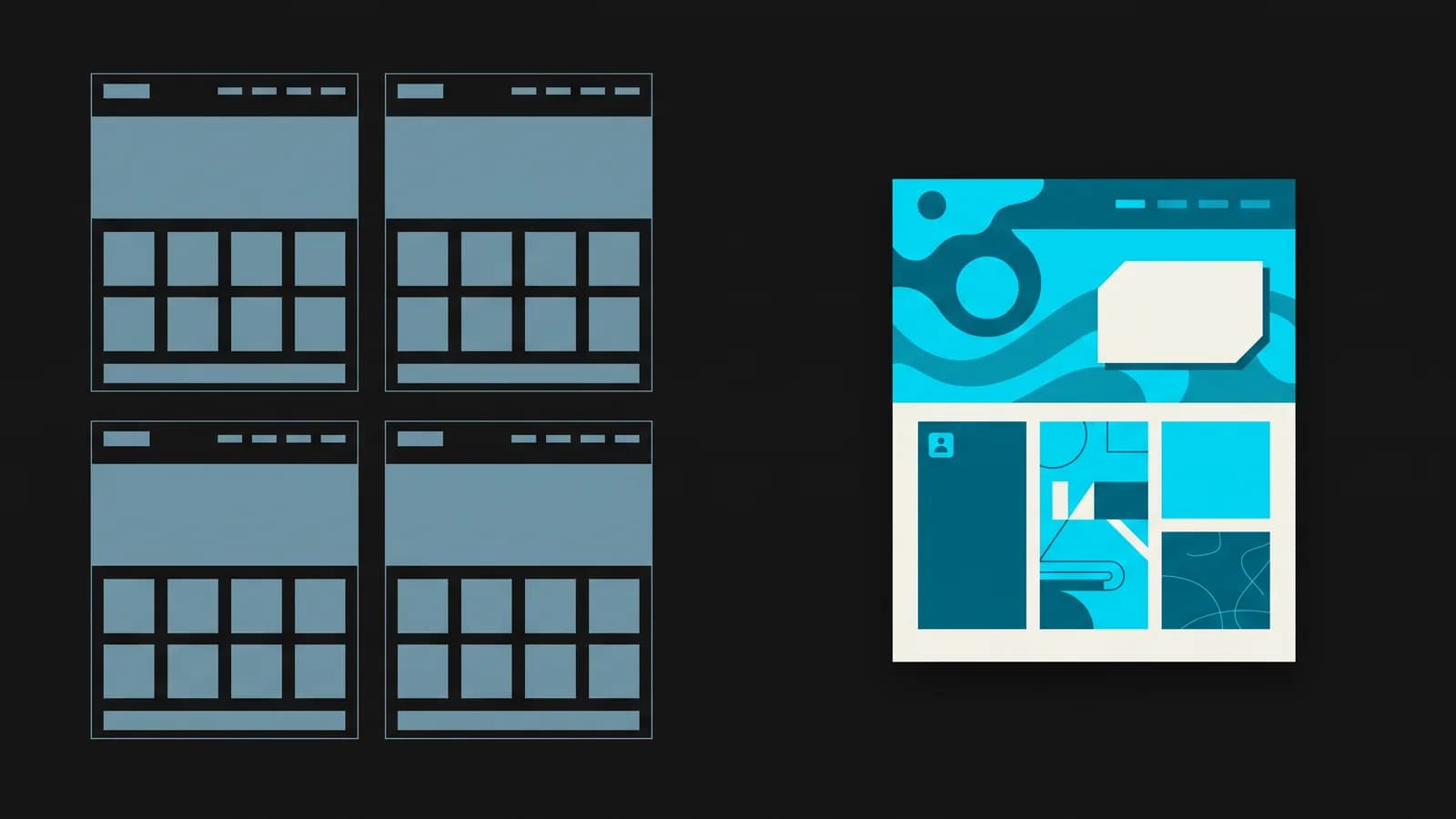
Open any small business website in your area and you'll notice something: they all look the same. The same stock photos. The same layout. The same generic "Welcome to our website" headline. The same WordPress theme that a thousand other businesses are using.
That's because most local businesses get sold a template website — a pre-built design with their logo and text swapped in. It's fast to produce, cheap to sell, and completely forgettable for the visitor.
When your potential customers are comparing multiple businesses online before making a decision, looking like everyone else isn't just boring — it's costing you business.
What Custom Web Design Actually Means
Custom web design doesn't mean every pixel is designed from scratch with no references or starting points. It means your website is built specifically for your business, your customers, and your goals. The design, layout, features, and content all work together to tell your unique story and convert your specific audience.
Here's what separates a custom site from a template:
- Strategic layout — Every section is placed intentionally to guide visitors toward taking action
- Original design — Visual identity that reflects your brand, not a template's default aesthetics
- Custom functionality — Features your business actually needs, not a bloated plugin library
- Performance-first code — Clean, lightweight code instead of template bloat
- SEO architecture — URL structure, metadata, and content hierarchy designed for search engines
Why Templates Fail Local Businesses
You Look Like Everyone Else
When a potential customer visits three electrician websites and they all use the same WordPress theme, none of them stand out. There's no visual signal that says "this business is more professional" or "I can trust these people." The business that looks different — in a polished, professional way — wins that customer.
Templates Are Built for Everyone, Optimized for No One
A template designed to work for restaurants, law firms, and plumbers can't be optimized for any of them. The layout isn't structured for your specific customer journey. The calls to action aren't positioned where your audience expects them. The content hierarchy doesn't emphasize what matters most to your buyers.
Performance Suffers
Templates come loaded with features you'll never use — sliders, animations, page builders, and dozens of plugins. All of that code loads on every page, whether it's needed or not. The result is a heavy, slow website that frustrates visitors and gets penalized by Google.
You Don't Own Anything Unique
When you build on someone else's template, you're renting their design decisions. Want to add a custom feature? You're limited by what the theme allows. Want to move to a different platform? You start over from zero. Your website should be an asset you own, not a rental you depend on.
The Custom Advantage
First Impressions That Convert
Researchers at Carleton University found that people form a reliable opinion of a web page's visual appeal in about 50 milliseconds — and that the judgment barely changes when they are given ten times longer to look (Lindgaard et al., 2006). That is not enough time to read a single word. It is a pure visual verdict, and it sticks.
When your website looks like it was built specifically for your business (because it was), visitors immediately perceive you as more established and trustworthy than competitors with generic template sites.
Built for Your Customer Journey
Every business has a different ideal customer journey. A fitness studio wants visitors to book a trial class. An electrician wants them to call for a quote. A restaurant wants them to view the menu and make a reservation.
Custom design means every element on your site is strategically placed to guide your specific visitors toward your specific conversion goal. Nothing is left to chance.
Speed That Keeps Visitors Engaged
Custom sites built on modern frameworks like React, Next.js or Astro ship far less code than a template stacked with page builders and plugins, and it shows in load times. Speed is not cosmetic either — Akamai measured a 7% drop in conversions from a 100-millisecond delay. Rather than take our word for it, pick any site in our portfolio and run it through our speed analyzer.
SEO Built Into the Foundation
A custom website lets you build SEO into the architecture from day one — clean URL structure, proper heading hierarchy, optimized metadata, schema markup, and fast load times. With a template, you're bolting SEO on top of a structure that wasn't designed for it.
Scalability Without Limitations
As your business grows, your website needs to grow with it. Custom development means you can add features, pages, integrations, and functionality without being limited by what a template theme supports. Need a custom booking system? A client portal? API integrations? It's all possible when you own the code.
The Investment Conversation
The most common objection to custom web design is cost, and it deserves a straight answer. Across our market, a template build tends to land somewhere around $500-$1,500 and a custom build in the low thousands — but the honest answer is that it depends entirely on what the site has to do. We quote every project individually, and the consultation is free. If what you actually need is an app rather than a website, our cost estimator will give you a real range in a couple of minutes.
Here's how to think about it:
Cost Per Year
A template site tends to get replaced every two or three years, because it dates badly or something breaks that nobody can fix. A well-built custom site runs four or five years and keeps performing. Spread the cost across the years it actually lasts and the gap narrows sharply — often to nothing, with better results the whole way through. Keeping it healthy is what a maintenance plan is for.
Cost Per Lead
The number that actually matters is cost per lead, not cost per site. A site that costs twice as much and brings in three times the enquiries is cheaper on the only measure your accountant cares about. Ask any agency quoting you for work how they intend to measure that — and be wary if they cannot answer.
Cost of Looking Average
What does it cost your business when a potential customer visits your site, sees a generic template, and chooses your competitor instead? You'll never know the exact number, but it's real and it compounds over time.
What the Build Process Looks Like
Custom web design doesn't have to be a painful, months-long process. Here's our typical approach:
Discovery (Week 1)
We learn about your business, your customers, your competitors, and your goals. We research your market and plan a strategy that aligns with what you're trying to achieve.
Design (Weeks 2-3)
We create custom mockups tailored to your brand, your content, and your customer journey. You review, give feedback, and we refine until it's exactly what you want.
Development (Weeks 3-5)
We build your site with modern technology — fast, secure, and optimized for search engines. Every page is coded clean, tested across devices, and performance-optimized.
Launch (Week 5-6)
We deploy the site, set up analytics, configure search essentials, and check everything over. Timelines vary with scope — a five-page brochure site and a booking platform are not the same job — so treat this as the usual shape rather than a fixed schedule. We confirm the real dates in writing before any work starts.
The Bottom Line
Your website is often the first and most important impression your business makes. A template website tells potential customers you're average. A custom website tells them you're the real deal.
The businesses that invest in standing out online are the ones that attract more customers, charge higher prices, and build stronger brands. The ones that blend in with templates are competing on price — and that's a race to the bottom nobody wins.
Your business is unique. Your website should be too.
If you want to see what that looks like in practice, browse the work or read about how we approach web design. When you are ready, get in touch — the first conversation costs nothing.
Ready to put these insights into action?
Get a free consultation and see how ProStart Solutions can help your business grow online.
Get Free ConsultationKeep reading
One Page Per Town: How Local SEO Structure Actually Works
Most local businesses try to rank one page for every town they serve. Here's why that fails, what building a page per service per market looks like, and the real numbers from a site we did it on.
What Happens to a Website After Launch
Nobody warns you that a website is a depreciating asset. Here's how sites quietly rot in the first two years, and what a maintenance plan is actually paying for.