One Page Per Town: How Local SEO Structure Actually Works
Most local businesses try to rank one page for every town they serve. Here's why that fails, what building a page per service per market looks like, and the real numbers from a site we did it on.
Jared Leagan
ProStart Solutions
The Mistake Almost Everyone Makes
Here is the standard approach. A business serves eight towns, so it writes one services page and lists all eight towns at the bottom. Sometimes in the footer. Sometimes in a sentence that reads "proudly serving Galax, Hillsville, Wytheville, Independence, Fries…"
It almost never works, and the reason is simple. Someone in Wytheville does not search for a general services page. They search for a specific service in Wytheville. Google's job is to hand them the closest available match, and a page about everything everywhere is not a close match for anything anywhere.
You are asking one page to win eight different competitions, each against a competitor whose page is about exactly that one thing.
What the Structure Should Be
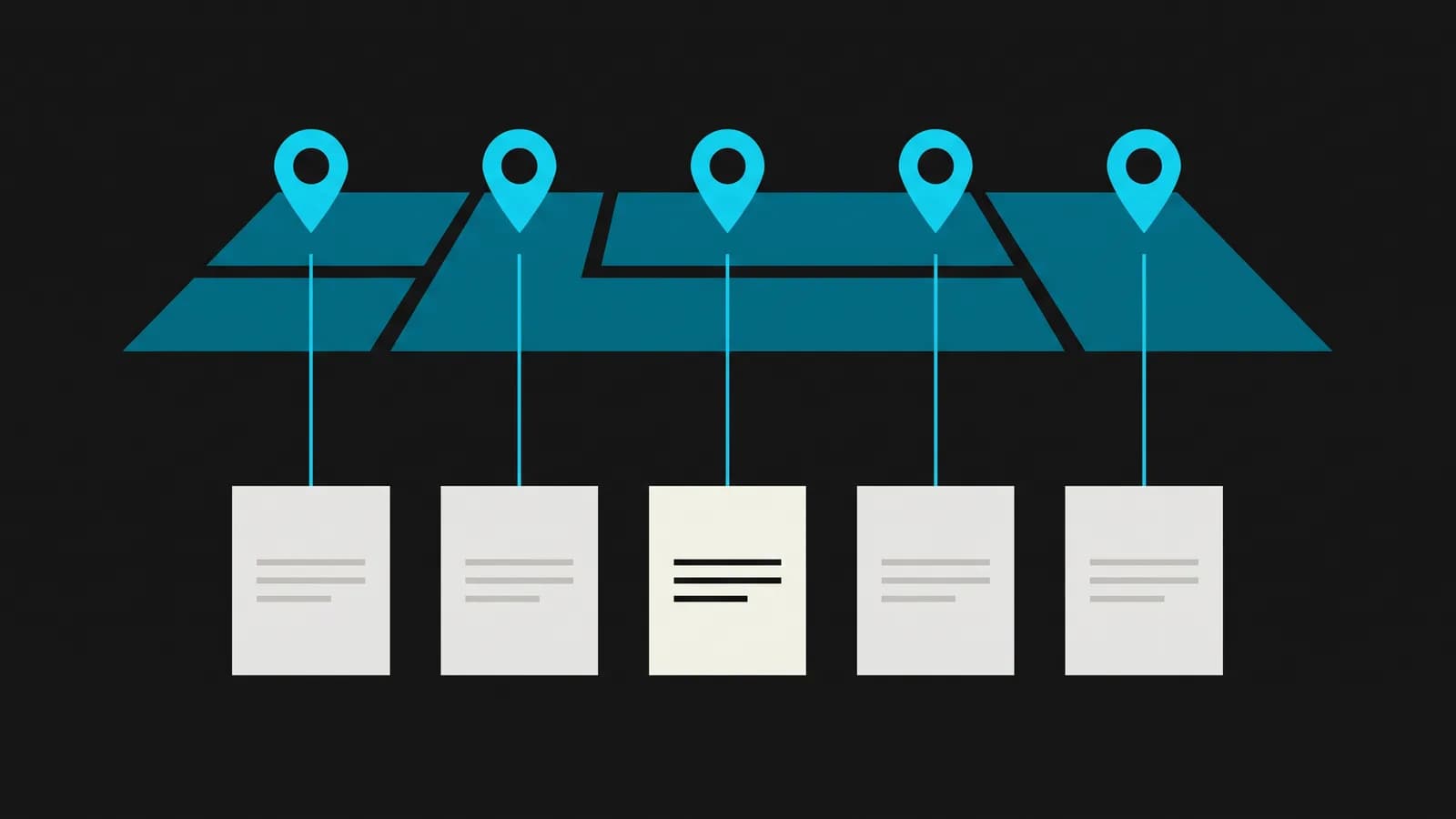
The alternative is a page for each service in each market you genuinely serve. A page about sealcoating in Wytheville, so that someone searching for sealcoating in Wytheville lands on a page about sealcoating in Wytheville.
Two service lines across sixteen markets is thirty-two pages. That sounds like a content nightmare, and done by hand it is. Done properly it is a data problem: services and markets are two lists, the page is a template, and the site generates the combinations at build time. That is what modern frameworks are genuinely good at, and it is one of the concrete reasons we do not build these on page-builder themes.
The Part Everyone Gets Wrong
Now the important caveat, because this technique has an ugly cousin.
Generating thirty-two pages that differ only by a find-and-replace on the town name is a well-known spam pattern. Google has been explicit about doorway pages for years, and a set of near-identical pages with swapped place names is the textbook example. It does not work, and at scale it can actively harm the site.
The difference between a location page and a doorway page is whether the page would be useful to a human who lives there. That means each one needs something genuinely local:
- Work you have actually done nearby, named and linked
- The specifics that vary by market — travel time, service radius, local conditions, permitting quirks, seasonal timing
- Real proof — reviews from that area, photos of that job
- An honest scope. If you only cover part of a county, say so.
The test is uncomfortable but clarifying: if you deleted the town name from the page, would anything left over tell a reader it was about their area? If not, you have built a doorway page and should build fewer, better ones instead.
This is also why the technique does not scale infinitely. You can support a page for every market you truly serve. You cannot support a page for every town within 200 miles, and attempting it is how sites get themselves in trouble.
What It Looks Like In Practice
Fox Ridge Media is our own clearest example. It is a photography and media business with two service lines — real estate media and short-term rental media — across sixteen markets stretching from Galax and Wytheville out to Boone and Winston-Salem. Every combination gets a dedicated page. Thirty-two in total, built on Astro, with pricing public and booking one click away from any page.
The numbers are the interesting part. Over the last thirty days, Cloudflare served 26,070 HTML responses from that site against 280 human visits. That gap is not a mistake and it is not inflated traffic — it is search crawlers methodically working through the structure. It is, by a wide margin, the most crawler attention of any site we run, and crawl activity at that level is the signal that a site's architecture is being actively indexed rather than skimmed.
To be clear about what that number is and is not: crawler traffic is not customers. It is evidence that the structure is legible to search engines, which is a precondition for ranking, not a substitute for it. Anyone quoting you crawl volume as a business result is selling you something.
Doing This Without a Developer
If a rebuild is not on the table, the same principle scales down. Pick your three most valuable markets — not all eight — and write one genuinely good page for each. Real local detail, real nearby work, honest scope. Three strong pages will outperform sixteen thin ones, and you can add more once you see which ones earn attention.
Then make sure the fundamentals underneath are not undermining you:
- Google Business Profile, complete and accurate. This does more for map pack visibility than any amount of page structure.
- Site speed. Structure cannot rescue a site that takes six seconds to load — test it here.
- Internal links. Location pages that nothing links to are effectively invisible. Link them from the relevant service page.
- Structured data, so the pages state plainly what they are and where they apply.
Our free local SEO audit checks most of that automatically and tells you which part is actually your bottleneck.
The Honest Summary
Location pages are not a trick. They work when they reflect a business that genuinely serves those places and can prove it, and they backfire when they are a find-and-replace exercise. The structural work is the easy half — the hard half is having something real to say about each market.
More on how we approach this under SEO optimization and our location pages, or read why SEO matters for local businesses for the broader case. If you want someone to look at your situation specifically, get in touch.
Ready to put these insights into action?
Get a free consultation and see how ProStart Solutions can help your business grow online.
Get Free ConsultationKeep reading

Why SEO Matters More Than Ever for Local Businesses
Search engine optimization isn't optional anymore. Why local businesses in Galax, VA and across Southwest Virginia need a real SEO strategy to stay competitive.

What Happens to a Website After Launch
Nobody warns you that a website is a depreciating asset. Here's how sites quietly rot in the first two years, and what a maintenance plan is actually paying for.